in this glossary terms about chapter one of the book are presented
closed system
noun
The closed system is a physical system that does not allow transfer of matter in or out of the system, though, in different contexts, such as physics, chemistry or engineering, the transfer of energy is or is not allowed.
Example: the simulation of a CLOSED SYSTEM with only one form of energy input is unlikely, with human intervention such as logging and fire fighting.
es: sistema cerrado
conduction
noun
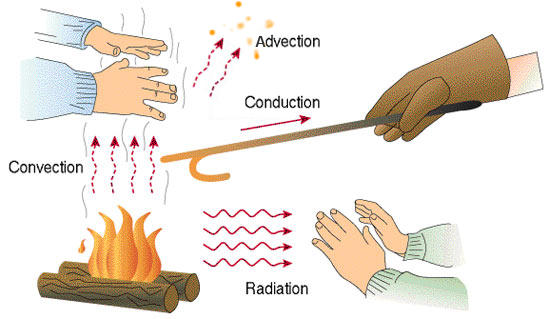
the process by which heat or electricity is directly transmitted through a substance when there is a difference of temperature or of electrical potential between adjoining regions, without movement of the material.
Example: Heat transfer from a solid to air is by CONDUCTION and partial convection.
es: conducción
consist of
noun
be composed or made up of.
Example: The method is extremely useful for producing small amounts of DNA even if degraded, the starting material may only CONSIST OF a single cell, and samples that were dried, mummified, embedded in amber and buried have been examined and amplified in this way.
es: consiste en
convection
noun
the movement caused within a fluid by the tendency of hotter and therefore less dense material to rise, and colder, denser material to sink under the influence of gravity, which consequently results in transfer of heat.
Example: The liquid portion heats rapidly by CONVECTION and transfers the heat into particulate by conduction.
es: convección
deal with
noun
to make business agreements with (someone) He deals fairly with all his customers. Their salespeople are very easy to deal with.
Example: Strategy Allow - Ideally an amount of contingency funds should be set aside to DEAL WITH any acceleration in costs.
es: tratar con
fixed mass
noun
The gaseous state is characterized by having a fixed mass, but variable shape and volume.
Example: The gaseous state has a fixed mass
es: masa fija
heat transfer
word
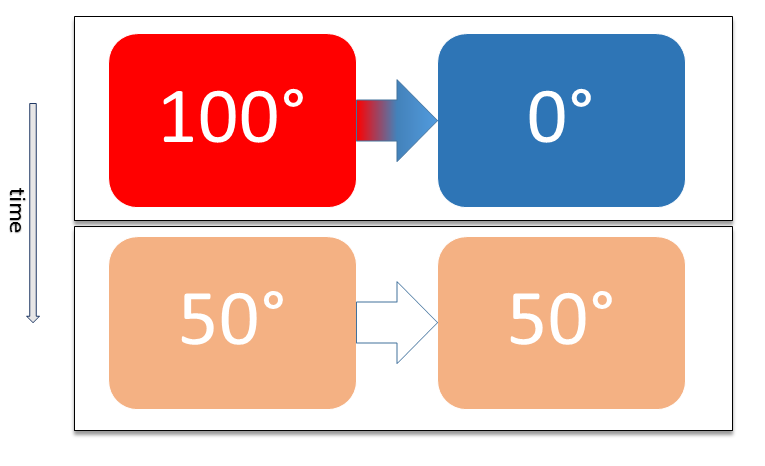
In general, heat transfer describes the flow of heat (thermal energy) due to temperature differences and the subsequent temperature distribution and changes.
Example: Physical state of the food (liquid or solid, natural convection is faster than HEAT TRANSFER by conduction). Size of the container and shape (determines rate of HEAT TRANSFER inside the container i.e. penetration to the centre).
es: transferencia de calor
inner surface
noun
surface that is inside some building
Example: The internal fluoride ion activity controls the potential of the INNER SURFACE of the LaF 3 crystal.
es: superficie interior
internal energy
noun
The internal energy of a thermodynamic system is the energy contained within it. It is the energy necessary to create or prepare the system in any given internal state. It does not include the kinetic energy of motion of the system as a whole, nor the potential energy of the system as a whole due to external force fields, including the energy of displacement of the surroundings of the system.
Example: As expected the rate constant increased with temperature due to the more INTERNAL ENERGY in the system, making it a lot easier to cross energetic barrier from reactants to products.
es: energía interna
mass transfer
noun
Mass transfer describes the transport of mass from one point to another and is one of the main pillars in the subject of Transport Phenomena.
Example: Process engineering help with plant suitability and compatibility, help decide between isolation options for example crystallisation, resolution of specific scale up issues for example agitation and heat MASS TRANSFER, and make sure engineering problems are not solved using chemistry.
es: transferencia de masa
open system
noun
a material system in which mass or energy can be lost to or gained from the environment.
es: sistema abierto
outer surface
noun
surface found on the outside
Example: The Biochemistry Of PhotosynthesisLight- Dependent Reaction (Fig 3): In both C 3 and C 4 plants, the chlorophyll molecules are arranged in the membranes of the thylakoids so that the haem group projects from the OUTER SURFACE.
es: Superficie exterior
radiation
noun
the emission of energy as electromagnetic waves or as moving subatomic particles, especially high-energy particles which cause ionization.
Example: higher temperatures in the sea water, increased UV RADIATION and poor nutrition make corals more susceptible to disease.
es: radiación
Total energy
noun
The total energy of a system is the sum of kinetic and gravitational potential energy, and this total energy is conserved in orbital motion.
Example: It is the ability of the chemical modelling software to give a breakdown of the TOTAL ENERGY which makes it so powerful.
es: Energía total
undergo
noun
experience or be subjected to (something, typically something unpleasant, painful, or arduous).
Example: It is obvious that the bread-makers will UNDERGO some vibration due to the rotation of the paddle and motor.